
Who Owns the Sacred Mountain?
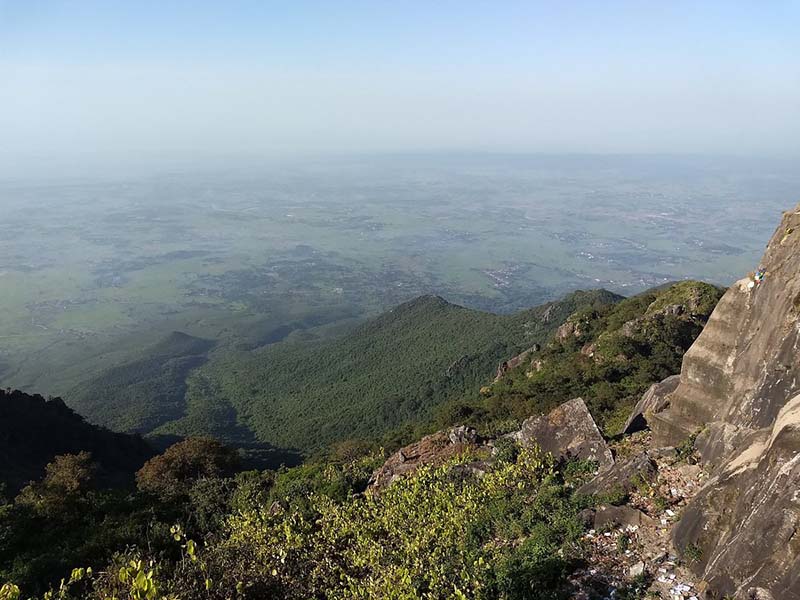
The sound of explosions at the foot of Parasnath Hill in Giridih district has fueled months of disputes in nearby villages. The stone quarry, owned by Aravali Minerals, has been operating in the area since 2019. It has provided jobs for around 140 people, but in recent months residents have complained about cracks in the walls of their homes, dust settling on farmland, and declining water levels in several wells.
The first person to openly oppose the quarry's expansion was Meena Tudu, a schoolteacher from the village of Madhuban. She collected residents' signatures and submitted a petition to the district administration demanding an independent environmental impact assessment of the blasting operations. According to Tudu, rocks flew beyond the quarry's perimeter during a blast in March, and several families discovered new cracks in their homes the following day.
“We are not demanding the closure of everything that provides people with an income. We want to know how much more forest will disappear and what will be left for our children if the work continues at this pace,” the teacher said at a meeting with local officials.
The environmental organization Jungle Jeevan, which sent its own team of observers to the site, claims that the quarry has expanded closer to a forest where local residents gather medicinal plants and graze livestock. Activists are also concerned that vibrations from the explosions could damage small springs used by several settlements. They are calling for a temporary halt to extraction until a geological survey and a review of the company's permits have been completed.
However, the demand for an immediate shutdown has angered quarry workers. Raghunath Mahto, a stonemason who has worked at the site for six years, said his salary allows him to support a family of five and pay for his daughter's college education. According to Mahto, there are few alternative employers in nearby villages, while seasonal construction work offers no reliable income.
“When the activists arrive, they talk about trees and water. That matters. But nobody explains how we are supposed to pay for food a month from now if the quarry closes,” Mahto said.
Company representatives deny violating environmental regulations. They maintain that the quarry uses controlled blasting techniques, regularly sprays its roads with water to reduce dust, and has already submitted a request for an additional site assessment. Management has also proposed installing vibration sensors near the closest homes but has so far refused to suspend production while the inspection is underway.
The dispute is further complicated by the religious significance of the hill itself. Parasnath, also known as Shikharji, is one of the most important pilgrimage sites for followers of Jainism. The surrounding forests are also significant to local tribal communities, which depend on them for traditional practices, forest produce, and certain religious ceremonies. For these communities, the dispute is about more than industrial extraction: it concerns their right to influence the future of land connected to generations of their ancestors.
The district administration has scheduled public hearings and requested additional information about the boundaries of the quarry's mining license. Before reaching a decision, specialists are expected to inspect local wells, measure vibration levels, and determine whether the planned expansion would affect protected areas. The company continues to operate within its existing licensed territory.
Meanwhile, residents of Madhuban have begun photographing new cracks in their walls and keeping records of blasting dates. Quarry workers, for their part, have prepared a petition asking officials not to make a decision without assessing the consequences for local employment. For the first time, both groups have agreed to meet with the administration together. Yet the central question remains unresolved: where does a company's right to extract stone end, and where does the right of local residents to protect land they consider part of their heritage begin?