Under Threat of Violence: Bangladesh Hindus Forced to Stop Construction of Lord Ram Statue
In a disturbing development highlighting the rising vulnerability of minority communities in Bangladesh, local Hindus in the northern district of Gaibandha have been forced to abruptly halt the construction of a prominent temple complex and a major idol of Lord Ram following direct threats of violence, vandalism, and communal backlash from radical Islamist groups.
The temple management committee stated that the painful decision to stop the civilizational project was taken under duress to "restore communal harmony" and protect the local Hindu population from potential physical attacks.
Aggressive Extremist Mobilization
The controversy centres around a major Sanatan religious and cultural project being built within the premises of the historic Sri Sri Radha Gobind and Kali Temple complex in the Palashbari area. The project was planned to house large idols of Hindu deities, including a monumental 82-foot-tall statue of Lord Ram, which was envisioned as a proud symbol of cultural heritage for the region's minority community.
However, the construction triggered an aggressive online and offline backlash. Radical groups launched viral, inflammatory campaigns on social media, labeling the architectural project as "un-Islamic" and a provocation to the majority populace.
Local reports confirm that hardline elements subsequently confronted the temple leadership, issuing explicit ultimatums that any attempt to continue the structure would result in large-scale vandalism, desecration of existing shrines, and targeted violence against Hindu households.
Forced Concessions for Safety
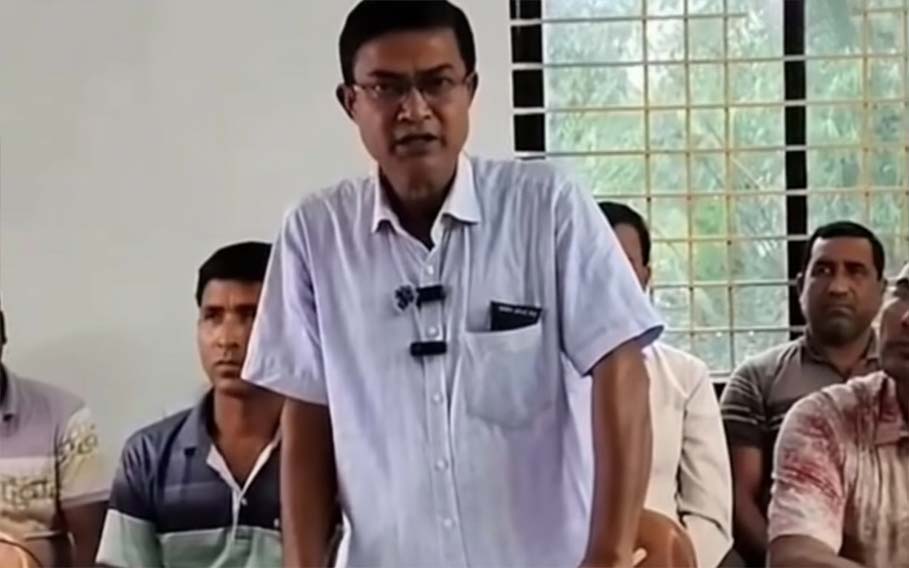
Fearing a repeat of past anti-Hindu pogroms, the temple committee formally announced a complete cessation of all construction work on the Lord Ram idol. A representative of the local community, speaking on condition of anonymity due to severe security fears, remarked:
"We are living in an atmosphere of constant intimidation. The project was completely legal and within our own private temple boundaries. Yet, when hundreds of extremists threaten to burn down your homes and break the sacred idols, you are left with no choice. We chose the life and security of our families over the completion of the statue."
Local administration and law enforcement authorities reportedly failed to provide adequate structural security or formal guarantees of protection, effectively forcing the minority community to bow to the demands of the fundamentalist mobs.
Broader Context of Minority Erosion
Human rights observers emphasize that this incident is not an isolated dispute but part of a systemic, escalating pattern of cultural and religious erasure targeting non-Muslims in Bangladesh. Since the massive political transitions and institutional unrest in the country, radical outfits have operated with increasing impunity.
Across various districts, puja committees and historic temples have reported regular extortion notes demanding heavy fines, unprovoked physical attacks on stone deities, and forced encroachment on ancestral temple lands.
The international community, alongside regional watchdogs, has expressed deep concern that the continuing failure of the interim Bangladeshi governance to strictly prosecute fundamentalist vigilantes is systematically destroying the secular fabric of the nation and pushing its remaining Hindu citizens into total social marginalization.