
Thousands of Lights, Mountains of Rubbish: Dev Deepawali Leaves Varanasi’s Ghats Covered in Waste
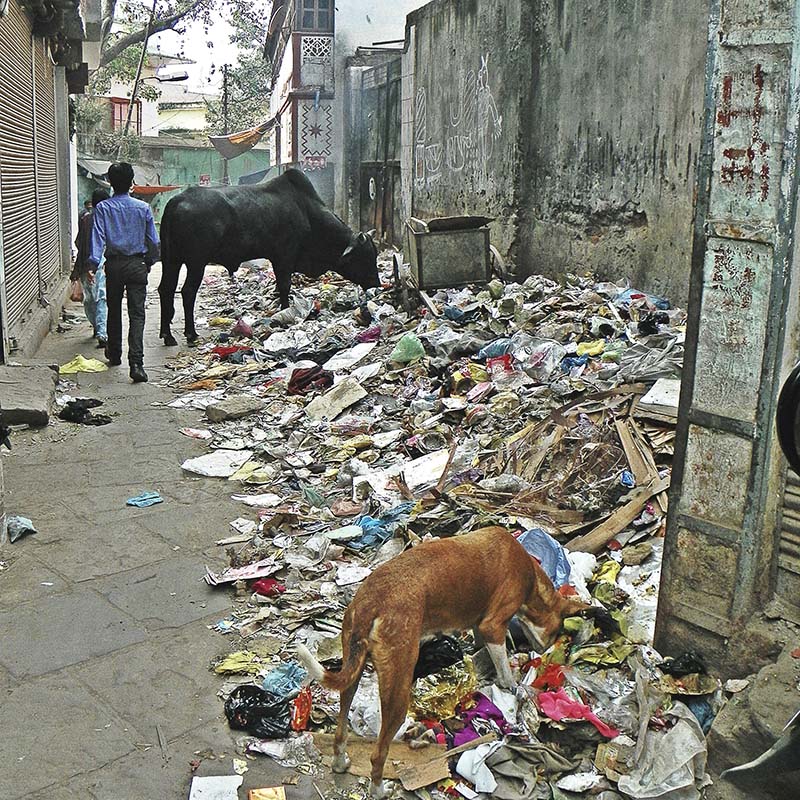
The morning after Dev Deepawali, Varanasi’s festive ghats looked very different. Where thousands of oil lamps had burned and crowds had gathered the previous evening, plastic bags, cups, food wrappers, wilted flowers and the remains of religious offerings were left behind. Rubbish had accumulated on the steps, in corners along the riverfront and near the access points to the Ganges, turning busy sections of the waterfront into large-scale cleanup sites.
The sheer amount of small waste scattered across the ghats was particularly striking. Some visitors had left packaging and bottles behind, while others had discarded used materials right beside areas where religious ceremonies had taken place. The rubbish also included the remains of festive offerings. Some sections looked as though people had simply forgotten that they were responsible for cleaning up after the celebrations.
Local activists expressed frustration that a festival associated with religious reverence for the Ganges had left so much waste along its banks. According to them, the problem extends beyond a few overflowing bins: rubbish was scattered across the steps and public spaces used by the city's residents. The contrast between honouring the sacred river during ceremonies and treating its surroundings carelessly once the crowds have left was particularly troubling.
The exact volume of waste left behind after the festival has not yet been calculated, so it would be premature to give a figure in tonnes. However, the extent of the litter was already evident the following morning. Cleaners had to work along the ghats, removing packaging, flowers and other remnants of the celebrations from the steps.
The situation has also caused frustration because similar consequences follow an event that attracts large crowds every year. The festive lights disappear within hours, but the rubbish left behind does not vanish on its own. It must be collected by hand, while some of the waste discarded near the water risks ending up directly in the Ganges.
For environmental activists, the scene has raised an uncomfortable question: why is respect for religious tradition not always accompanied by basic responsibility for the places where it is celebrated? After Dev Deepawali, Varanasi is once again confronting a problem that cannot be concealed by the beauty of thousands of lights — the consequences of the festivalgoers' own behaviour.