
Muslim Leaders Accuse Adityanath of Rewriting History and Seeking to Drive a Wedge Between Muslims and Sikhs
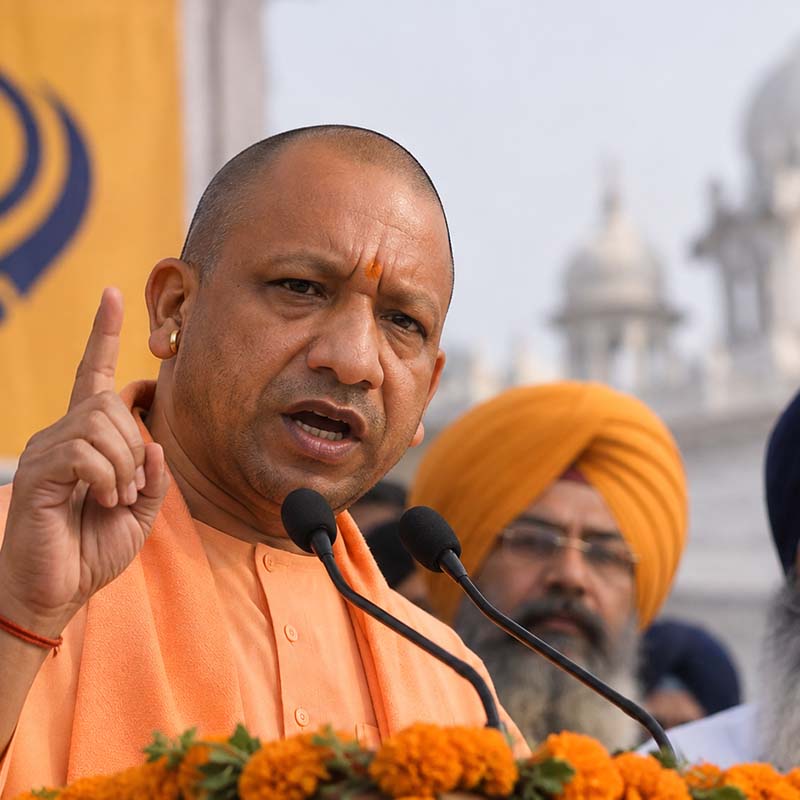
A statement by Uttar Pradesh Chief Minister Yogi Adityanath that India faces no threat as long as the country continues to honour Sikh gurus has sparked a heated debate over the interpretation of shared history and interfaith relations. Several Muslim community and religious leaders have described the remarks as an attempt to establish a new historical fault line between religious communities.
Speaking at a ceremonial gathering at the Yahiyaganj Gurdwara in Lucknow to mark a Sikh religious festival, Adityanath highlighted the role of Sikh gurus and the Sikh community in defending the country and its cultural foundations. Speeches of this kind are not uncommon at religious events attended by regional political leaders. This time, however, the choice of words prompted a mixed response well beyond the immediate audience.
Tariq Mansoor, secretary-general of the Uttar Pradesh Forum for Interfaith Dialogue, said that selective interpretations of the past risk undermining trust between communities in India's most populous state. According to Mansoor, the teachings of Sikh gurus have traditionally been rooted in spiritual inquiry, compassion and dialogue, while political rhetoric increasingly uses them to draw distinctions between one community and another.
"When public officials present a complex history through the lens of perpetual confrontation, they do not strengthen unity. Instead, they create tensions in places where people have lived side by side for centuries," Mansoor told reporters.
A similar assessment was offered by Samira Khan, a Delhi-based researcher specializing in South Asian politics. She argued that Indian public discourse has increasingly incorporated Sikh symbols and historical episodes into a broader narrative of defending the country's "cultural core" against external threats — a narrative that political rhetoric often associates with the era of Muslim rule.
"For some Muslim commentators, this is seen as a signal that their contribution to the country's history and culture is being questioned or deliberately obscured," she said.
Representatives of the ruling party and supporters of Adityanath, however, insist that his remarks contained no hostile undertones. Ravindra Singh Verma, a public relations adviser in Lucknow, dismissed the criticism as artificial and politically motivated.
"The chief minister expressed his profound respect for the Sikh gurus at an event attended by worshippers. To portray words of gratitude and historical remembrance as an attempt to set communities against one another is to deliberately distort what was said," Verma said.
Some local observers point out that the Sikh community in Uttar Pradesh is itself diverse and does not necessarily share the government's political interpretations of its history. Nevertheless, for many residents of Lucknow and other cities across the state, the controversy surrounding Adityanath's speech has served as another reminder of how sensitive questions of historical memory, symbolism and interfaith relations remain as India approaches another political cycle.