
In an Indian Village, a Goddess Is Married to a River Every Year — Then Villagers Mourn Her Departure
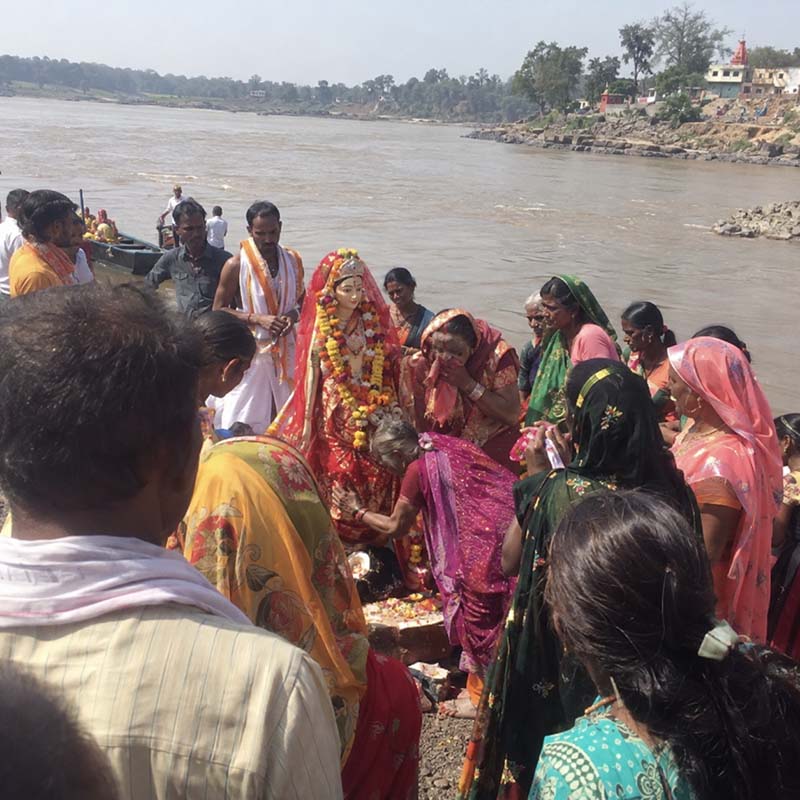
In the village of Bajpur, on the banks of the Narmada River, an annual wedding takes place without a human bride or groom. Residents dress a small statue of the goddess Revati in a red sari, adorn it with flower garlands, and carry it toward the water to the sound of drums. There, a symbolic marriage between the goddess and the river is performed, followed by a farewell ritual.
According to 58-year-old Kamla Bai, who has helped prepare the ceremony for more than thirty years, the custom reflects a belief that the river becomes the goddess’s spouse and takes her under its protection. Older women prepare jewelry, sweets, and a small bridal trousseau for the statue. Men accompany the procession, while a local priest recites prayers on the riverbank.
The most emotional part begins after the ceremony. Women take turns touching the statue’s feet, adjusting its clothing, and lamenting as they would when bidding farewell to a daughter leaving her family home after marriage. Some bring rice and flowers, while others ask the goddess to protect their families and keep the river from drought.
The statue is not immersed in the water. After the ceremony, it is returned to a small temple on the outskirts of the village. Residents explain that the goddess symbolically departs to join the river but returns to her worshippers each year. This is why the celebration combines wedding festivities with a sorrowful farewell.
In recent years, the ritual has attracted visitors from neighboring settlements. This has upset some participants, who fear the ceremony will become a tourist spectacle. Organizers have asked visitors not to take close-up photographs of the weeping women or interfere with the prayers.
Despite the growing interest from outsiders, residents of Bajpur have no plans to abandon the tradition. For them, it is not a theatrical performance but an annual ritual in which the marriage represents the bond between the goddess and the river, while the tears mark a farewell to the figure they regard as their village’s protector.